Wood Species for Sauna Construction: Characteristics, Origins, and Performance
By Paul CasoPublished Updated
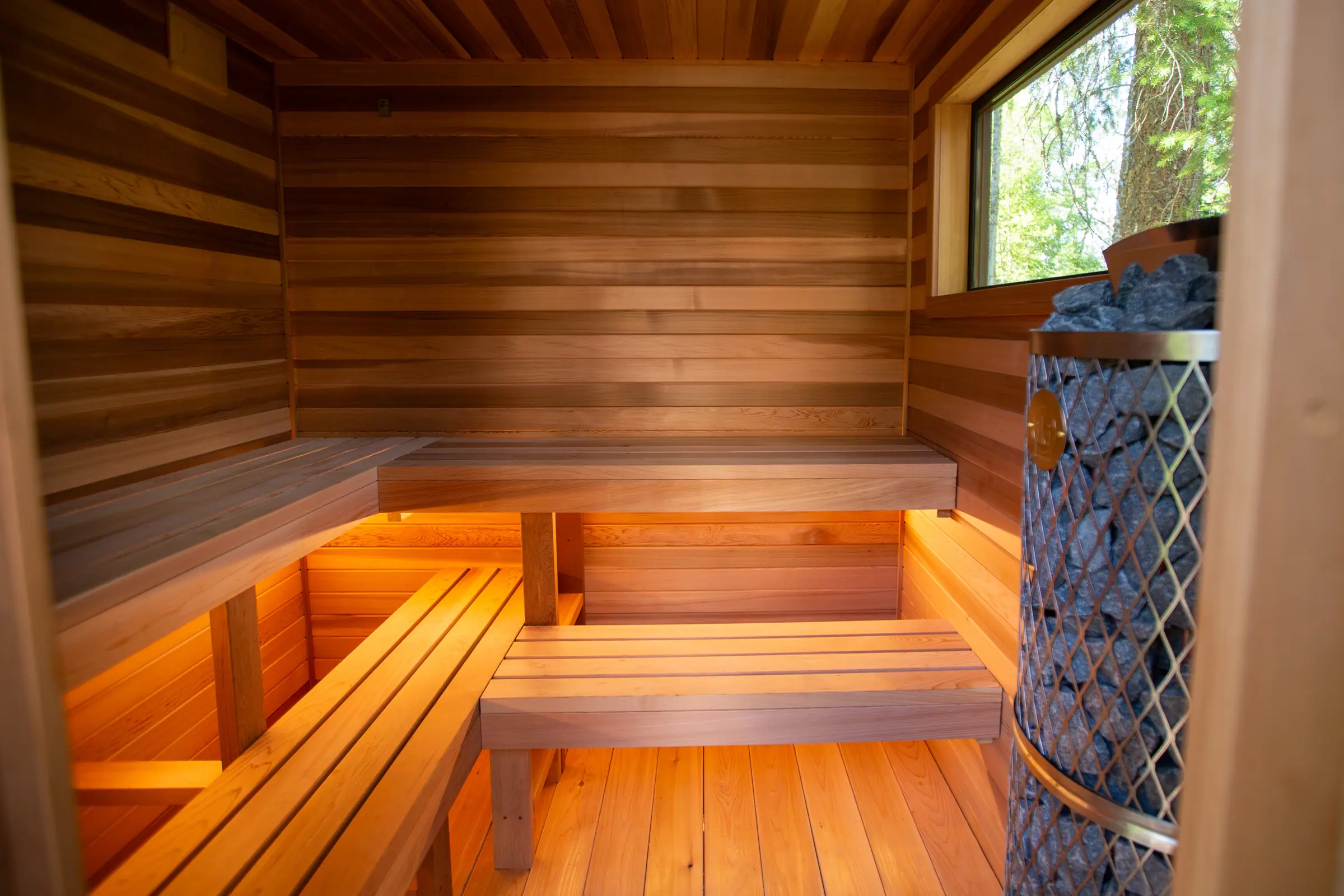
Selecting the appropriate wood species is one of the most consequential decisions in sauna construction. The wood must withstand extreme heat and humidity cycles while remaining dimensionally stable, safe to the touch, and aesthetically pleasing. Among the most commonly used species in North America and Europe are tight knot cedar, clear cedar, aspen, and alder. Each offers distinct benefits in terms of durability, workability, visual appeal, and tactile comfort. In addition, a growing segment of the market is turning to thermally modified wood products, especially modified aspen, radiata pine, and spruce for enhanced stability, longevity, and design versatility.
This article provides a detailed comparison of these natural wood species, explores the origins and properties that make them suitable for sauna environments, and explains the thermal modification process and why it has become highly desirable in the modern sauna industry.
Cedar: Tight Knot vs. Clear
**Origins and Characteristics
**Western Red Cedar is sourced primarily from the Pacific Northwest regions of the United States and Canada, including British Columbia, Washington, and Oregon. It is renowned for its natural resistance to decay, low density, and exceptional dimensional stability.
**Tight Knot Cedar
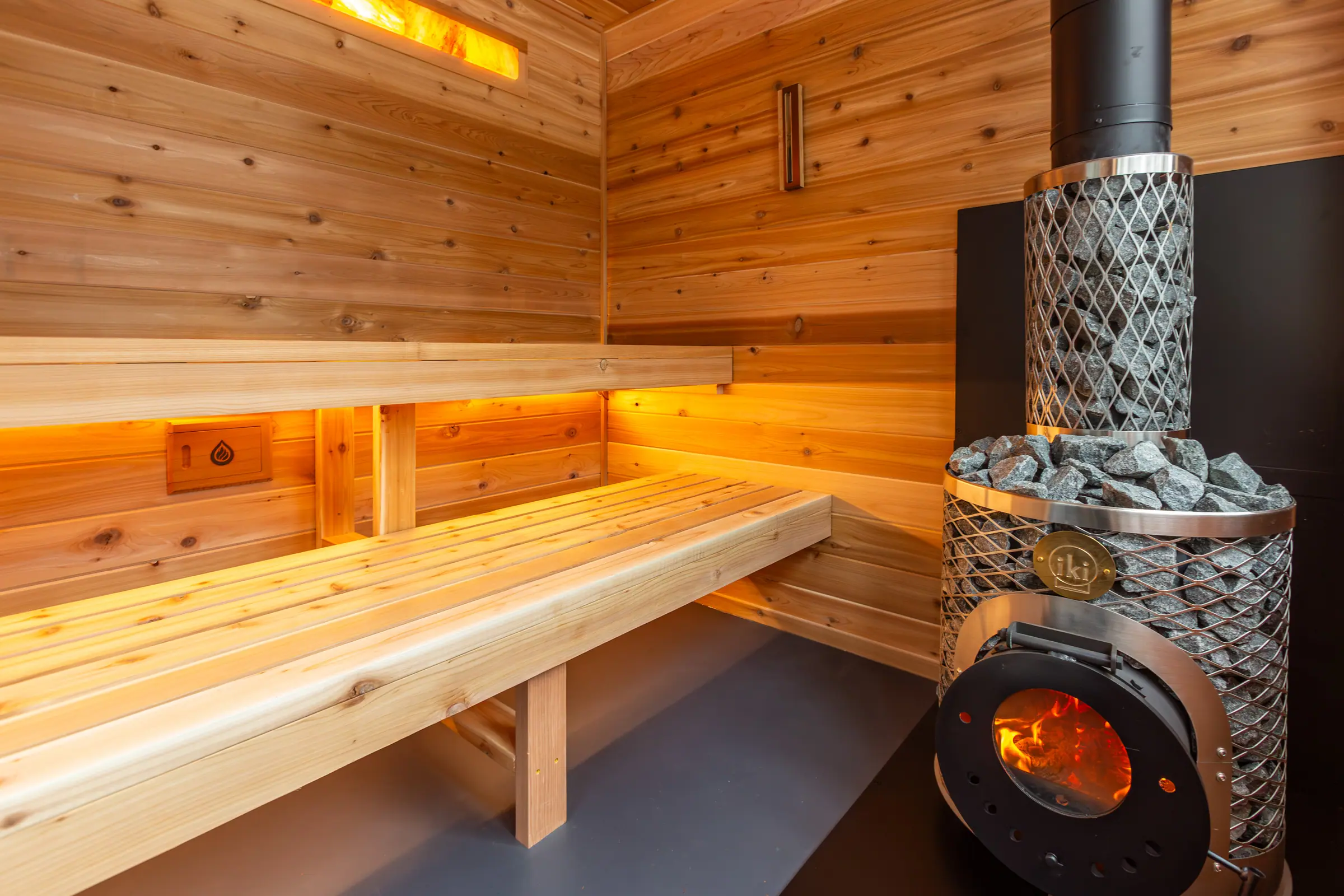
**Tight knot (or “knotty”) cedar contains small, intergrown knots that create a more rustic aesthetic. The knots are small and do not fall out, providing character without compromising performance.
Key properties:
-
Aromatic qualities: Strong, classic cedar aroma due to natural oils.
-
Heat performance: Remains relatively cool to the touch because of its inherent low density.
-
Durability: Naturally rot-resistant with good longevity.
-
Visual impact: Adds warmth and a cabin-like feel.
This option appeals to clients seeking visual texture and a traditional, natural look. The knots slightly reduce the overall uniformity but do not significantly impact structural integrity in a sauna context.
**Clear Cedar
**Clear cedar is free of knots and has a uniformly straight grain. It is considered a premium material due to additional milling and scarcity as it comes only from the center of the tree.
Key properties:
-
Elite appearance: Smooth, refined, and highly consistent.
-
Superior workability: Fewer defects make installation cleaner and easier.
-
Premium cost: Higher price point but often preferred for contemporary or luxury saunas.
Both cedar grades share the same aromatic oils, which act as natural preservatives and contribute to resistance against mold and mildew, an important factor in a wet/dry cycle environment. However, the strong aroma, while pleasant to many, may be overpowering for sauna users who prefer a more neutral sensory experience.
Aspen
Aspen is sourced mostly from Northern Europe (Finland and the Baltics) and, to a lesser extent, from North American aspen forests. It has become a popular choice for high-end sauna manufacturers and builders.
Key properties:
-
Neutral scent: Nearly odorless, which makes it well suited for those sensitive to aromatic woods.
-
Smooth texture: Fine, even grain produces a soft tactile feel ideal for benches.
-
Stable and light: Aspen does not splinter easily and stays cool on the skin.
Aspen’s pale color provides a clean, Scandinavian aesthetic that pairs well with modern design styles. Its understated appearance and high comfort factor make it one of the top choices for premium residential and commercial sauna interiors.
Alder
Alder grows predominantly in the Pacific Northwest and Western Canada. While not as universally used as cedar or aspen, it offers several properties that suit sauna environments.
Key properties:
-
Moderate density: Feels slightly firmer than aspen yet still comfortable to the touch.
-
Warm color: Starts light brown and deepens to a rich, warm hue over time.
-
Good machining characteristics: Easy to mill and finish cleanly.
Alder strikes a balance between durability and aesthetics. Although it lacks some of cedar’s natural aromatic oils, it delivers a sophisticated, warm visual profile and stable performance.
Thermally Modified Wood: Process and Advantages
Thermal modification is a controlled process that uses high heat, typically between 160 to 215°C, combined with low oxygen levels to permanently alter the chemical structure of wood. No chemicals are added; the transformation is achieved through heat alone. The process removes moisture, reduces hemicellulose content (which fungi feed on), and alters the cell wall to improve dimensional stability.
Why Thermally Modified Wood Is Well Suited for Saunas:
-
Exceptional stability: Less expansion and contraction under fluctuating heat and humidity.
-
Improved resistance to decay: The reduction in nutrients makes the wood less hospitable to mold and mildew.
-
Reduced moisture absorption: Ideal for maintaining structural integrity and surface quality.
-
Enhanced color: Rich, consistent tones similar to tropical hardwoods but without the ecological consequences.
As sauna design trends favor more luxurious aesthetics after repeated use, thermally modified products have become a preferred solution for builders and clients alike.
Comparing Thermally Modified Aspen, Radiata Pine, and Spruce
Thermally Modified Aspen
Modified aspen is widely used in Finnish and European sauna manufacturing.
Attributes:
-
Superior stability: Aspen already performs well in high heat; modification enhances this further.
-
Silky texture: Remains one of the most comfortable bench materials available.
-
Rich chocolate-brown color: Provides a contemporary, high-contrast interior aesthetic.
Thermally modified aspen represents the premium end of the market for its combination of comfort, beauty, and predictable performance.
Thermally Modified Radiata Pine
Radiata pine originates primarily from New Zealand and Chile. It contains more natural resin than aspen, which is why thermal modification is particularly beneficial. Low resin woods are ideal for saunas as they will not sap or bleed at high heats which can negatively affect the look and feel of the wood.
Attributes:
-
Cost-effective: More economical compared to modified aspen.
-
Attractive grain: The modification darkens pine to a walnut-like tone.
-
Moderate stability: Improved significantly but still not as dimensionally stable as aspen.
Modified radiata pine is a solid middle-tier option offering strong aesthetics at a value-oriented price.
Thermally Modified Spruce
Spruce is widely sourced from Nordic countries, Russia, and Central Europe.
Attributes:
-
Enhanced durability: Modification improves decay resistance and stability.
-
Lightweight: Easy to install and handle.
-
Rustic grain: Offers a natural look even after darkening.
-
Cost competitive: Typically less expensive than modified aspen.
Modified spruce is well suited for wall and ceiling applications, though less commonly used for benches compared to modified aspen due to slightly higher splinter potential.
Conclusion
Tight knot cedar, clear cedar, aspen, and alder each offer distinct performance characteristics for sauna construction. Cedar delivers natural durability and a classic aromatic profile; aspen provides exceptional comfort and neutrality; alder offers warm aesthetics and consistent workability. For those seeking a more dimensionally stable, richly colored, and low-maintenance product, thermally modified woods, particularly modified aspen, provide industry-leading performance.
Choosing the right wood ultimately depends on design goals, budget, desired sensory experience, and long-term maintenance considerations.
Written by the team at Montana Sauna Company. We design and build custom saunas in Montana and deliver nationwide, except Hawaii.